
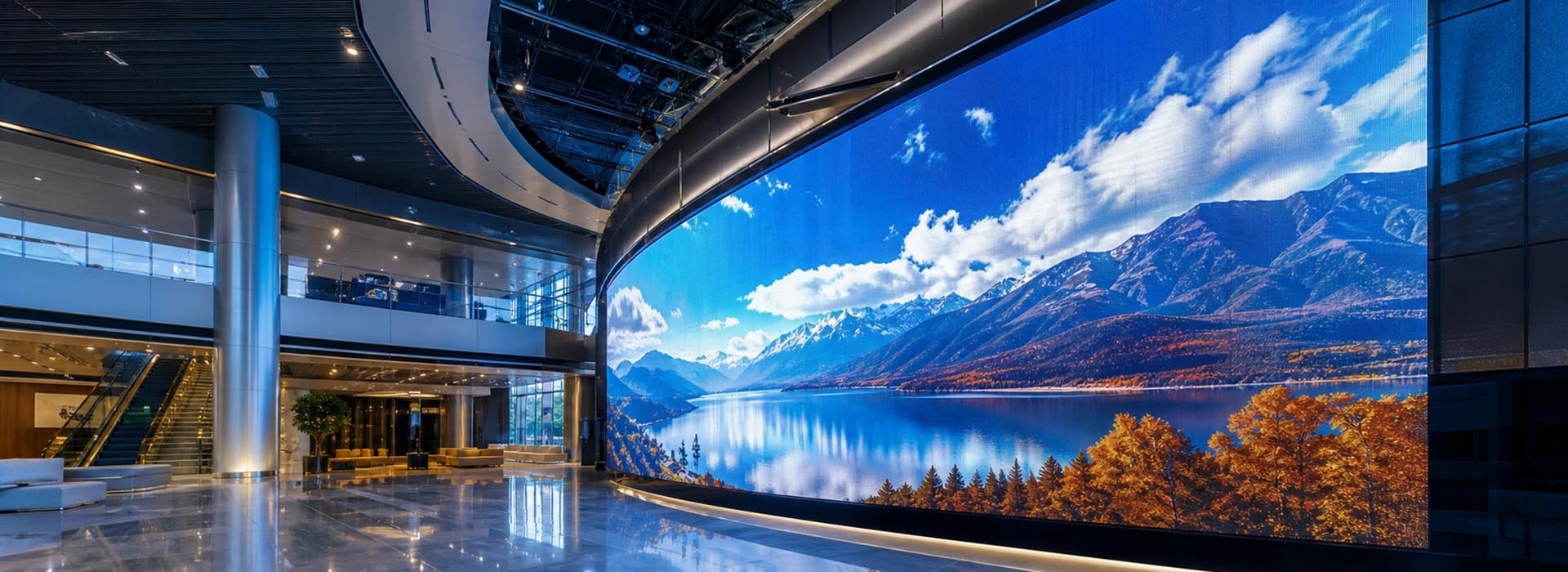
When choosing an LED display supplier, most customers always want to know one thing: how an LED display is actually made and whether the quality is truly reliable.
In this article, we will walk you through the full LED display manufacturing process—from raw materials to final shipment—so you can clearly understand how a professional LED factory ensures stable performance and long service life.
1. Raw Material Inspection (IQC)
We always start with strict incoming quality control. Every component is carefully inspected before production begins, including LED chips, PCB boards, IC drivers, power supplies, and cabinet materials.
We never choose materials based only on cost. Stable and high-quality raw materials are essential to ensure long-term display performance and reliability.
2. SMT Process (PCB Assembly for LED Modules)
The SMT process is the core step in LED module manufacturing and directly determines product quality.
It includes solder paste printing, SPI inspection, high-speed component placement, reflow soldering, AOI inspection, X-ray inspection, and functional testing.
This stage directly affects dead pixel rate, module stability, and product lifespan. Any weakness in SMT quality may lead to hidden failures later, so every detail is strictly controlled.
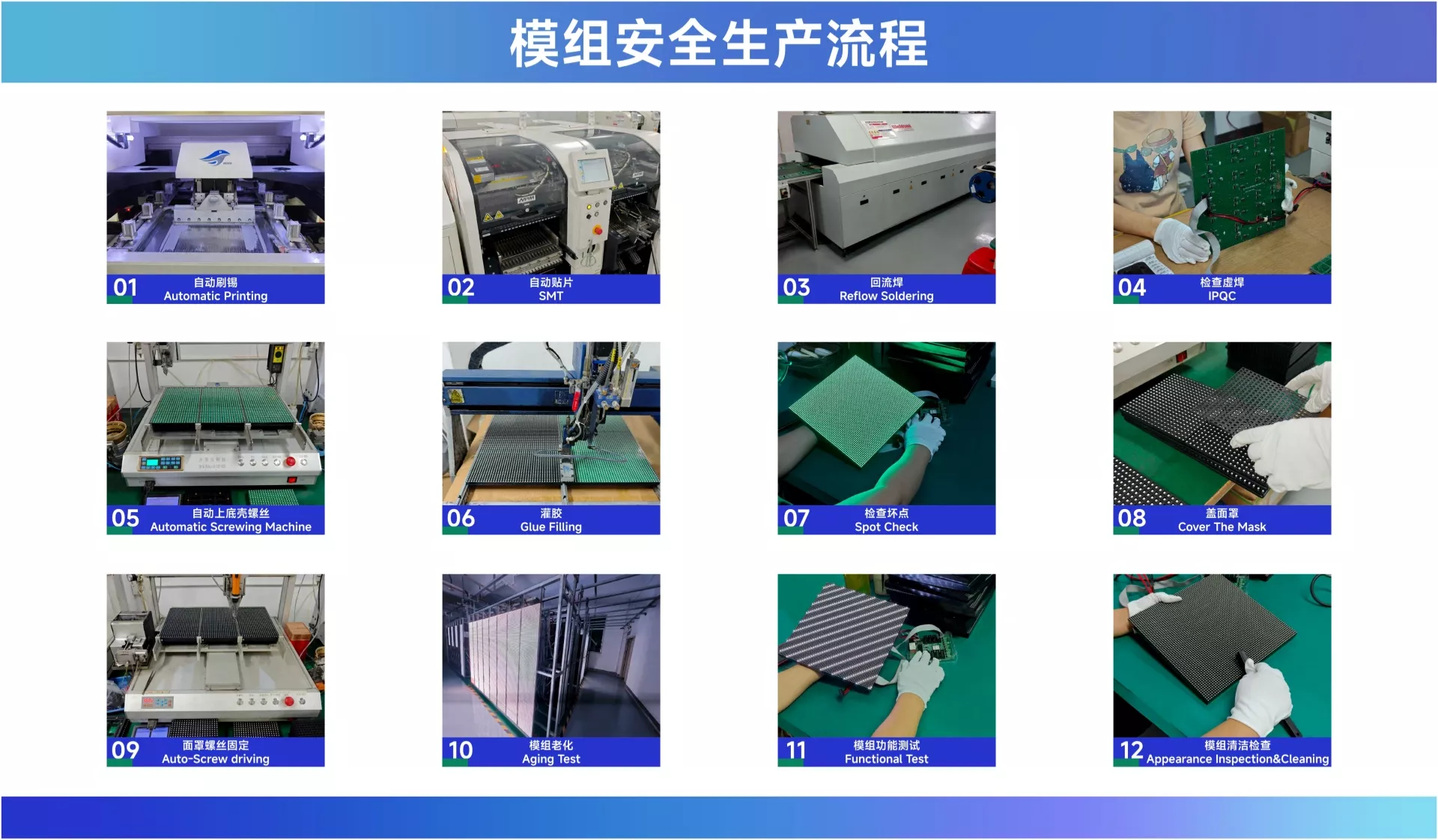
3. LED Module Production
After SMT, we proceed to module assembly and finishing processes, including automatic screw fastening, waterproof glue filling for outdoor modules, mask installation, full inspection, aging testing, functional testing, and final cleaning.
For outdoor applications, modules must meet IP65/IP67 waterproof standards. Flatness and color consistency are also strictly controlled.
4. Cabinet Assembly (Structure + Electronics Integration)
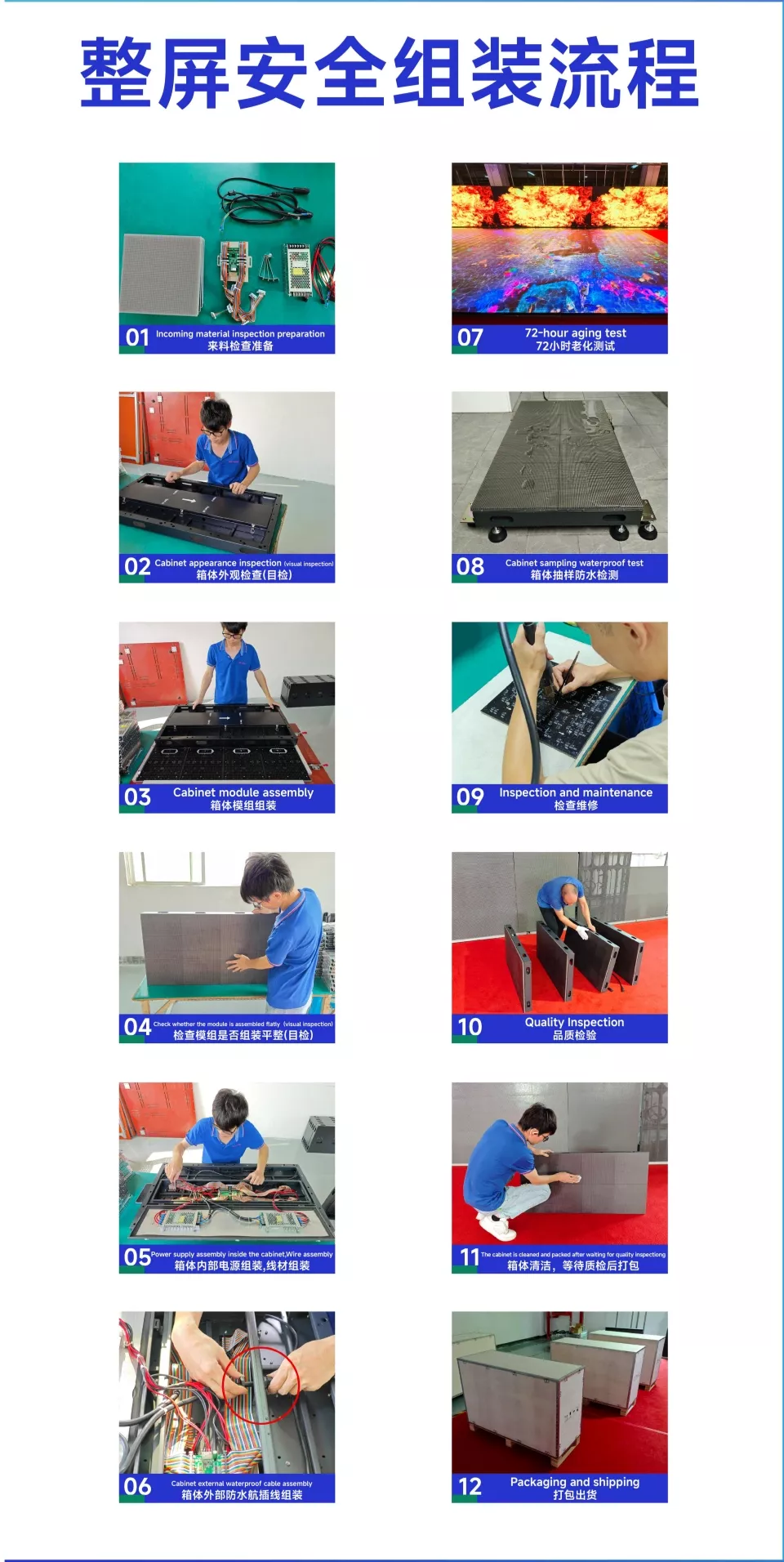
At this stage, LED modules, power systems, and control systems are assembled into the cabinet.
Key processes include cabinet structure inspection, module installation, power and control integration, wiring, and waterproof connector installation.
Every connection is checked manually because incorrect wiring can cause serious system failure, so precision is critical.
5. 72-Hour Aging Test (Mandatory)
Every LED display undergoes a continuous 72-hour aging test before shipment.
During this process, we evaluate brightness stability, color consistency, signal performance, and heat dissipation.
This step helps detect potential issues in advance and ensures only stable products are delivered.
6. Waterproof & Reliability Testing
Outdoor LED displays must pass additional environmental tests, including waterproof and dustproof testing (IP65/IP67), humidity resistance testing, and high/low temperature cycling tests.
These tests ensure the display can operate reliably in harsh outdoor environments, especially for advertising applications.
7. Final Quality Inspection
Before shipment, each LED display undergoes final inspection, including screen flatness check, color uniformity verification, pixel inspection, and signal testing.
Only products that pass all checks are approved for delivery.
8. Packaging & Shipping
We use professional packaging to ensure safe transportation. Flight cases are used for rental LED displays, while plywood crates are used for fixed installation screens.
This ensures products arrive safely anywhere in the world.
Why Our Process Matters
Many customers focus only on price, but the real difference lies in manufacturing quality control.
A low-cost LED display may skip key processes, while a professional factory strictly follows every step.
That is why some screens fail within months, while others operate reliably for more than five years. The difference is not only price—it is the manufacturing process behind it.
Final Thoughts
If you are planning an LED display project, always ask your supplier:
Do they control the full production process? Do they perform a 72-hour aging test? Do they conduct waterproof and reliability testing?
Because in this industry, quality is not promised—it is manufactured.