
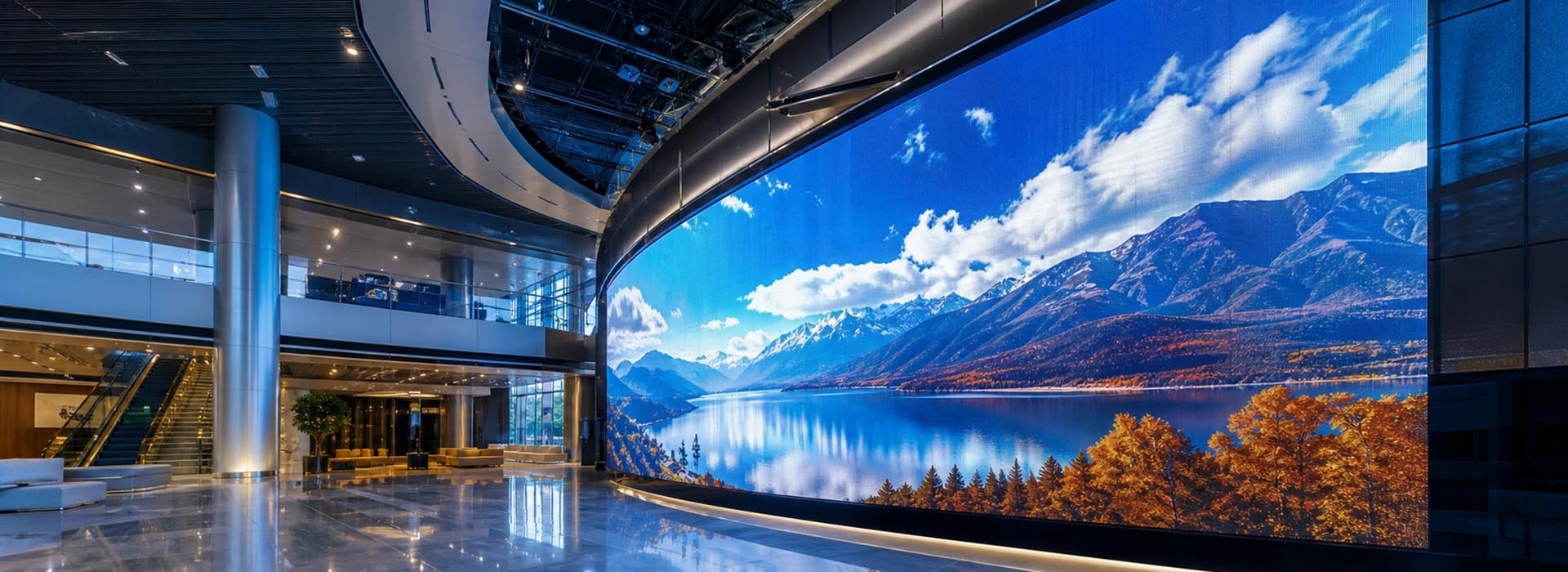
The LED display industry is evolving rapidly, driven by continuous technological innovation and increasing demand for high-quality visual solutions. Among the most advanced technologies today, COB (Chip on Board) and GOB (Glue on Board) LED displays stand out as two leading approaches.
Understanding the differences between these two technologies is essential for selecting the right LED display solution based on performance, environment, and budget. This article provides a comprehensive comparison of COB and GOB LED displays, covering their structures, advantages, applications, and key differences.
What is COB (Chip on Board)?
COB (Chip on Board) is an advanced LED packaging technology in which multiple LED chips are directly mounted onto a PCB (Printed Circuit Board). These chips are then coated with a protective resin layer to enhance durability and light performance.
Unlike traditional SMD packaging, COB eliminates individual LED encapsulation, resulting in a more compact and efficient structure.
Key Features of COB LED Displays
- Ultra-high pixel density with fine pixel pitch capability
- Excellent heat dissipation due to direct chip mounting
- Seamless and smooth visual performance
- Strong protection against dust and moisture via resin coating
- High cost efficiency in small-pitch mass production
Applications of COB LED Displays
COB technology is ideal for high-resolution indoor environments, including:
- Indoor high-definition video walls
- Control rooms and monitoring centers
- Medical imaging and diagnostic displays
- Broadcast studios
- Retail and exhibition displays
COB is especially suitable for close-viewing applications where image clarity and seamless visuals are critical.
What is GOB (Glue on Board)?
GOB (Glue on Board) is a protective LED display technology where a transparent epoxy resin layer is applied directly over conventional LED modules. This layer acts as a protective barrier for the LED surface.
Unlike COB, GOB does not change the chip packaging structure. Instead, it enhances protection by sealing the LED module surface.
Key Features of GOB LED Displays
- Strong physical protection against impact and damage
- High waterproof and dustproof performance (IP65/IP67 level)
- Improved color consistency and reduced light leakage
- Reliable performance in harsh environments
- Suitable for medium to large pixel pitch displays
Applications of GOB LED Displays
GOB technology is widely used in outdoor and industrial environments, such as:
- Outdoor advertising billboards
- Stadium and sports arena screens
- Transportation signage systems
- Industrial monitoring environments
- Public information display systems
GOB is ideal for applications requiring strong environmental resistance and long-term durability.
COB vs GOB LED Displays: Key Differences
| Feature | COB (Chip on Board) | GOB (Glue on Board) |
|---|---|---|
| Technology | Direct chip mounting on PCB | Protective glue coating over modules |
| Pixel Density | Very high (fine pixel pitch) | Medium to large pixel pitch |
| Visual Quality | Ultra-smooth and seamless | Good uniformity, slightly less refined |
| Protection Level | Resin protection, moderate outdoor resistance | Strong waterproof and dustproof protection |
| Durability | Best for indoor environments | Excellent for outdoor and harsh conditions |
| Heat Dissipation | Superior thermal performance | Moderate heat management |
| Maintenance | Easier chip-level repair | More complex due to sealed surface |
| Cost Efficiency | Better for high-resolution indoor use | Better for rugged outdoor applications |
Ideal Applications for COB LED Displays
COB technology is designed for environments requiring extremely high image quality and close viewing distances.
1. Indoor High-Resolution Video Walls
COB delivers ultra-fine pixel pitch and seamless visuals, making it ideal for conference rooms, shopping malls, and control centers.
2. Medical Display Systems
Medical imaging requires high precision and clarity, which COB technology provides reliably.
3. Control Rooms
Power plants, security centers, and traffic monitoring systems benefit from COB’s stable performance and heat management.
4. Retail and Exhibition Displays
COB displays enhance visual impact with high brightness, clarity, and immersive presentation.
Advantages Summary
- Ultra-fine pixel pitch (as low as 0.7mm)
- Seamless display surface
- High color accuracy and refresh rate
- Flexible installation options
Ideal Applications for GOB LED Displays
GOB technology is optimized for durability and environmental resistance, making it ideal for outdoor and industrial applications.
1. Outdoor Advertising Displays
GOB ensures stable performance under sunlight, rain, dust, and temperature changes.
2. Stadium Screens
Large outdoor screens benefit from GOB’s strong impact resistance and visibility.
3. Transportation Systems
Bus stations, airports, and highways require reliable signage under constant environmental exposure.
4. Industrial Environments
Factories, ports, and mining areas rely on GOB for its rugged protection.
Advantages Summary
- High waterproof and dustproof performance
- Strong impact resistance
- Stable long-term outdoor operation
- Suitable for medium/large pixel pitch applications
Conclusion
Choosing between COB and GOB LED display technologies depends on your application requirements.
COB LED displays are the best choice for indoor, high-resolution, and close-viewing environments where image quality and seamless visuals are the top priority.
GOB LED displays are more suitable for outdoor and industrial applications where durability, waterproofing, and environmental resistance are essential.
In short:
- COB = Ultimate visual quality for indoor use
- GOB = Maximum durability for outdoor environments
Both technologies continue to evolve with improvements in performance, reliability, and cost efficiency, offering more flexible solutions for modern LED display applications.
FAQs
Q1: What is the main difference between COB and GOB LED displays?
COB integrates LED chips directly onto the PCB, while GOB applies a protective glue layer over traditional LED modules.
Q2: Which is better for outdoor use?
GOB is better suited for outdoor environments due to its strong waterproof and dustproof protection.
Q3: Can COB LED displays be used outdoors?
COB is mainly designed for indoor applications, though limited outdoor use is possible with controlled environments.
Q4: Which technology has better image quality?
COB provides superior image quality with finer pixel pitch and seamless visuals.
Q5: Which is more durable?
GOB offers higher physical durability and environmental resistance.